Courts
Where case papers live once a matter is filed
A filed paper in Maine lives with whichever of seven named bodies its kind of matter assigns. The Judicial Branch page read on September 6, 2026 names them all and publishes no rule for reading the files they hold.
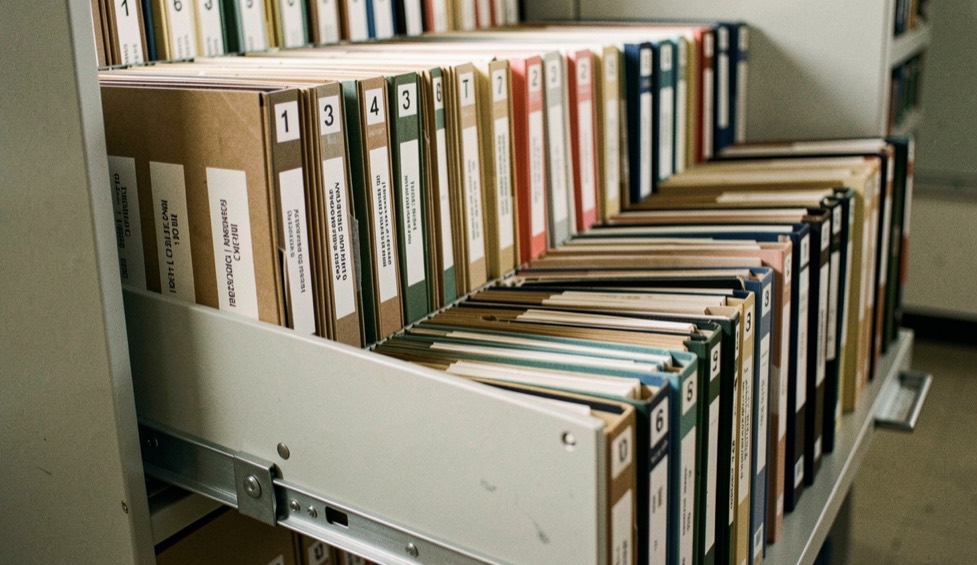
Where a case file lives in Maine is a question of kind before it is a question of place: the Judicial Branch's page describing its courts, read on September 6, 2026, names seven bodies, and the kind of matter filed decides which of them holds the paper.
Seven bodies, one page of descriptions
The page sits at the center of the Judicial Branch's own site and reads more like a register than a directory. Each body receives a paragraph: the Supreme Judicial Court; the District Court and the Superior Court, together the Branch's "principal trial courts"; a Family Division; a Violations Bureau for traffic tickets; the Treatment and Recovery Courts; and the Business and Consumer Court, "also known as the BCD". A trial court, in this arrangement, is where a matter is tried, and the Supreme Judicial Court stands apart because its work arrives once the trials are over. Place appears nowhere in the layout: the page is ordered by what each body does.
Which court holds the paper at the start?
The page gives the order of travel: the Supreme Judicial Court receives a matter's questions only "when a case is appealed from a trial court", so the paper starts lower down, on ground the page divides by the weight of the matter. The Superior Court is the one "where almost all civil and criminal matters may be tried". The District Court is where "lesser criminal offenses, civil actions, and family law matters may be tried". Both descriptions, read on September 6, 2026, carry the same hedge: "may be tried" is wording, not a promise about any case, and "almost all" leaves a margin the page does not fill. The two sentences say what each court can hear; they assign no specific matter to either one, and how the courts fit together has its own folio on this site.
One bureau, the whole state, and no crime
The traffic section is where assumption and published text part ways. A reader might suppose a ticket opens a criminal file in a nearby courthouse; the page says otherwise twice. The Violations Bureau "handles traffic tickets for the entire State of Maine through a centralized process", one bureau for the whole state, which makes the file's home a process rather than a choice of courthouse. And "traffic violations are non-criminal offenses also called traffic infractions", a gloss the page supplies itself: an infraction, in its usage, is an offense without criminal character, which sets a ticket's paper apart from the criminal matters the trial courts try. Where the centralized process is answered, what it asks and what it costs, the page read on September 6, 2026 does not publish.
Not everything on the list is a trial court
The page names only two principal trial courts, and its other entries do different work. The Family Division "provides support for a variety of cases involving families and children in District Court, including divorce and family separation, child protection cases, juvenile cases, and more": support inside an existing court rather than a court of its own. The Business and Consumer Court is "a statewide court docket that handles selected business and/or consumer cases". The page never defines "docket", though what a docket is is a question this site treats elsewhere; "selected" does quiet work, taking some such cases and not others. The Treatment and Recovery Courts offer "intensive, community-based, court-supervised treatment and strict accountability for eligible individuals with serious substance use and/or mental health disorders" involved with the criminal justice or child protection system. "Eligible" is the third hedge, and the page names no test for it.
What happens to a paper that is appealed?
The top of the structure carries two names. The Supreme Judicial Court's major job, the page says, is "to decide appeals on questions of law that arise in civil actions and criminal trials", questions that arrive "when a case is appealed from a trial court". The same paragraph fixes the naming: "In its appellate capacity (as interpreter of the laws), the Court is called the Law Court." Appellate capacity, as the page glosses it, means sitting as interpreter of the laws rather than as the place of trial. The effect is practical for any search: a decision headed Law Court and a decision headed Supreme Judicial Court come from the same body, so a search under either name reads one institution. What an appeal file contains, and how a written decision is built, is the business of this site's folios on decisions.
The clocks the courts page leaves out
For a page about where files live, it publishes nothing about how they are read. The text of September 6, 2026 carries no rule on access to case records or dockets, no fee, no deadline, no figure of any kind across its seven sections. Other public bodies in Maine publish clocks for their own files, and the comparison is the point of the table below. Each figure comes from the source named beside it, read on September 6, 2026, and the agency clock in the first row is the clock that this site's folio on how a records request works describes at length.
| Filed paper | Clock | Published figure | Source |
|---|---|---|---|
| Records request to an agency or official | Acknowledgment of receipt | 5 working days | Title 1, section 408-A |
| Discrimination complaint at the state Human Rights Commission | Respondent's reply | Generally one month | Commission pages |
| Same complaint | Written disagreement window | 17 days | Commission pages |
| Same complaint | Earliest request to sue | 180 days or more after filing | Commission pages |
| Same complaint | Whole process completed | Within 2 years of filing | Commission pages |
| Court action after dismissal, right-to-sue letter or failed conciliation | Filing deadline | Greater of 2 years after the act or 90 days | Commission pages |
| Case file in any Maine court | Any clock at all | None published | Branch courts page |
The last row is a boundary, not a criticism. The agency clock and the Commission's chain of intervals are published where the table says they are; the courts page offers no interval to quote. The one step the page itself provides sits under the trial court descriptions: a link marked Find a Court. Opening it is the move from a map of seven bodies toward named places, and which places it names is the Branch's to say. This folio has quoted the map, and the map, read on September 6, 2026, stops exactly there.