Rubrique 04
A written decision, taken apart
How a decision is assembled, how a statutory citation is built, what an official page publishes and what it leaves silent.
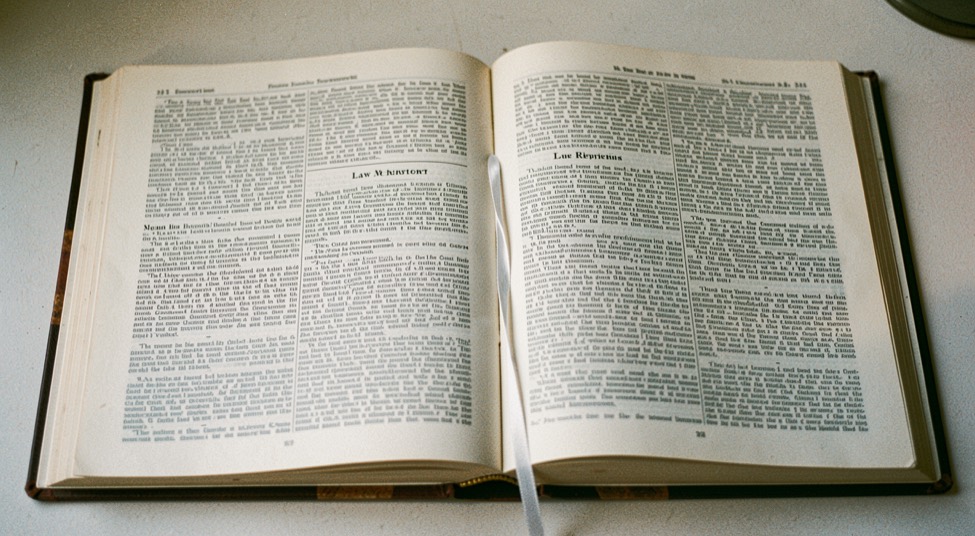
A published decision looks impenetrable and is in fact highly conventional. It has a caption, a procedural history, findings, a discussion and a disposition, in that order, and once the order is known the document becomes navigable in a couple of minutes.
The document is also an assembly. Facts arrive from both sides, a recommendation is prepared, a vote is taken, and a clock runs on each stage. The finished prose shows none of that work. The article on the anatomy of a written decision takes one document apart, stage by stage, with the public pages that publish every number.
The citation belongs to the same family of conventions. It works like an address: the title picks the body of law, the section picks the clause, and the digits in parentheses pick the exact rule. Once that order is known, a string of references becomes a set of directions. The article on how a citation is built explains the mechanism, and every number quoted there can be checked against the official text.
Why the summary at the top is not the ruling
The paragraph that summarises a case is frequently written by a publisher, not by the court, and it has no authority at all. Quoting it as though the court said it is the single most common mistake in secondhand accounts of a case.
That paragraph has a name of its own: a headnote. It sits at the top of a published decision, and it describes the ruling, which is not the same as being the ruling. The article what a headnote is marks the line between that descriptive layer and the vote, the order or the disposition that decides, so that a quotation can be traced to the layer that carries weight.
Which pages publish, and which stay silent?
Maine publishes some figures and stays silent on others, and both states can be checked by any reader. The article on published and unpublished inventories what the courts page, the access statute, the Human Rights Commission and the Bar publish, and what is not there. A silence on a public page is a fact once it has been verified, and the folio does not speculate about what no page publishes.
What this folio is for
Not for arguing about outcomes. For getting a reader to the operative sentences of a document they can already legally read, so that they are arguing about the text instead of about someone’s description of it.
The four articles sit naturally in a sequence: the parts of a decision, the descriptive layer, the citation, then publication. A reader who wants to test the method can take any number quoted in the citation article and check it against the official text.
In this folio
-
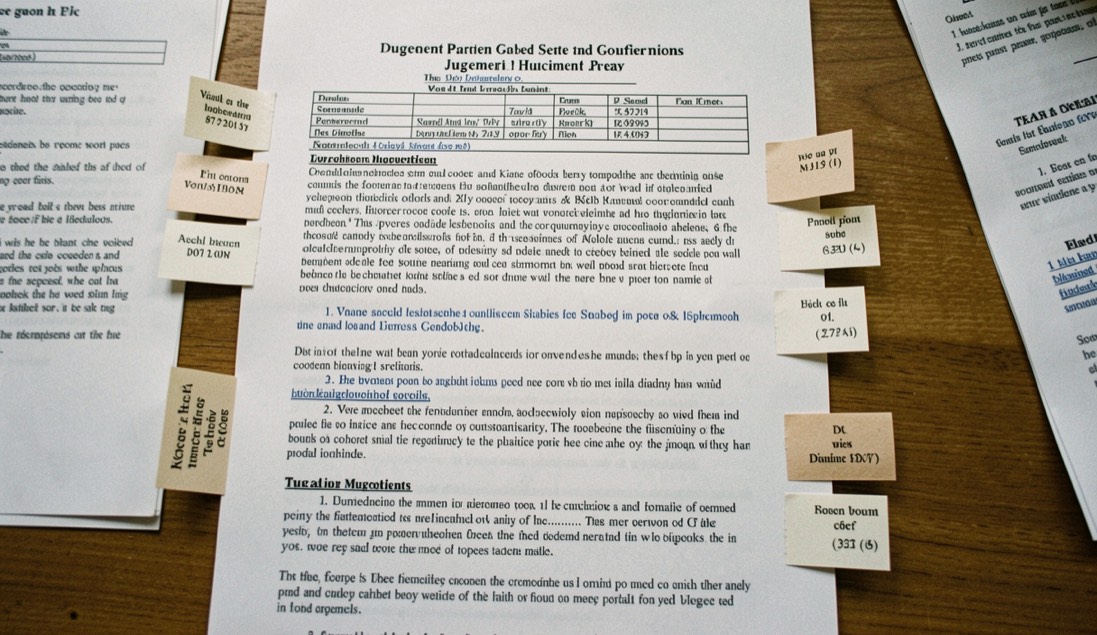
The anatomy of a written decision
A published decision is an assembly: facts given by both sides, a recommendation, a vote, a clock on each stage. This folio takes one apart, part by part, with the public pages that publish every number.
Rubrique 04
-
Why the summary at the top is not the ruling
The summary at the top of a published decision describes the ruling; it is not the ruling. Plain Docket marks the line between a descriptive layer and the vote, the order or the disposition that decides.
Rubrique 04
-
How a legal citation is built
A citation is an address: the title picks the body of law, the section picks the clause, the digits in parentheses pick the exact rule. Every number quoted here can be checked against the official text.
Rubrique 04
-

Published, unpublished, and what follows from the difference
Maine publishes some figures and stays silent on others; both states can be checked by any reader. What the courts page, the access statute, the Human Rights Commission and the Bar publish, and what is not there.
Rubrique 04