Public records
What a records request costs, and when money is asked first
Maine's access statute caps what an agency may charge: two hours of staff time, then not more than $25 an hour, ten cents a page, with advance payment allowed once an estimate passes $100.
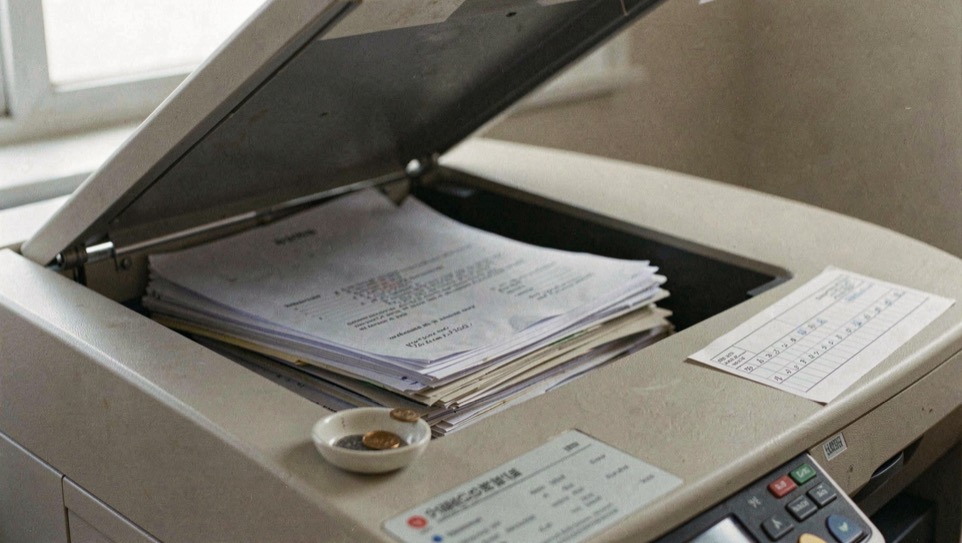
The first two hours of staff time on a public records request in Maine carry no fee, and a standard black and white letter copy may not be priced above ten cents a page, under Title 1, section 408-A of the Maine Revised Statutes, read on the Legislature's website on September 6, 2026. Those two ceilings, with the rule that lets an agency require payment in advance once an estimate passes $100, are the cost side of the access law as the Legislature publishes it. The fee rules apply once a request is in, whatever the office later decides about what counts as a public record, and the first thing they price is time.
What the overview page leaves out
The state's own account of the law, the Freedom of Access Act page on maine.gov, read on September 6, 2026, speaks in broader terms than its fee rules. The page says the Act "grants the people of this state a broad right of access to public records while protecting legitimate governmental interests and the privacy rights of individual citizens", and that it "ensures the accountability of the government to the citizens of the state by requiring public access to the meetings of public bodies". It does not publish the statutory citation, the definitions, the rules on who may request, or the Ombudsman's powers. The dollars and the deadlines live one layer down, in Title 1, section 408-A, and that is the text the rest of this page reads.
Two ceilings, not two prices
Subsection 8, paragraph B of section 408-A prices the labor. The agency or official "may not charge a fee for the first 2 hours of staff time per request", and after those hours it "may charge a fee of not more than $25 per hour". Two phrases carry the weight. "Per request" fixes the free hours to the request itself, and "not more than" makes $25 an hour a ceiling rather than a tariff. What any particular office actually charges under that ceiling is not stated in the material read here.
The page price sits in the same subsection, paragraph A, framed the same way: "no more than 10 cents per page" for "a standard 8 1/2 inches by 11 inches black and white copy". That qualifier is the whole of the rule, because the ceiling names the size and the color it was written for. The pages read publish no rate for a color copy, a larger sheet, or any other medium, and the ten cent figure cannot be carried across to them. A reader checking an invoice against the statute has, in the material read here, one page price and no other.
When may an agency ask for the money first?
Advance payment has its own subsection, the tenth, and its condition is one clause: paragraph A allows payment to be required in advance when "the estimated total cost exceeds $100". The number the test reads is an estimate, not a bill, and the one estimate the statute expressly orders, in subsection 3, carries the word nonbinding in its own text. A threshold hung on a figure the law declines to bind is the sharpest construction in the fee provisions. The pages read do not publish how a divergence between an estimate and a final cost is resolved, in either direction. The verb that carries the threshold is "exceeds", and on its face an estimate of exactly $100 does not pass it.
Where the estimate comes from
Subsection 3 is where a request first meets a clock. It requires the agency to acknowledge receipt "within 5 working days of receiving the request", and, "within a reasonable time of receiving the request", to give a "good faith, nonbinding estimate of the time frame". Read side by side, the two estimates in the statute are not the same animal: subsection 3 orders an estimate of time, while the advance payment threshold in subsection 10 turns on "the estimated total cost". Which provision produces the cost figure that the $100 test reads is not stated in the pages read on September 6, 2026. The order of the whole sequence, filing to answer, is laid out in how a request proceeds, and subsection 3 is its front door.
What if the request is refused instead?
Fees are one way a request ends in disagreement; a denial is the other. Subsection 4 makes a refusal "subject to appeal as provided in section 409", which points the reader out of section 408-A and into a separate provision of the same title. The appeal route is treated in when a request is refused. The cost provisions publish no rule connecting a prepayment to a later denial, and the pages read do not say whether money advanced comes back. That question rests where the text leaves it.
The figures, side by side
Every number section 408-A publishes about cost and timing, with the place each one occupies in the text, compares as follows. Each figure is a ceiling or a deadline as the statute states it, read on September 6, 2026, not a description of what any agency does.
| What section 408-A fixes | The published figure | Where it sits |
|---|---|---|
| Acknowledgement of a request | Within 5 working days | Subsection 3 |
| Estimate of the time frame | Good faith, nonbinding, within a reasonable time | Subsection 3 |
| First hours of staff time | First 2 hours, no fee | Subsection 8, par. B |
| Staff time beyond the first 2 hours | Not more than $25 per hour | Subsection 8, par. B |
| Standard letter copy, black and white | No more than 10 cents per page | Subsection 8, par. A |
| Advance payment | Allowed when the estimated total cost exceeds $100 | Subsection 10, par. A |
| A denial | Subject to appeal under section 409 | Subsection 4 |
Title 1, section 408-A sits on the Legislature's website, and subsection 8, two paragraphs long, holds both ceilings. A reader who has received an estimate from an agency can open the statute beside it and set the hours, the hourly rate and the page price in the text against the numbers on the estimate, one line at a time.